Rubber extruding machines are essential manufacturing equipment that transforms raw rubber compounds into precise shapes and profiles for countless industrial applications. Whether you’re researching hot feed rubber extruder machine technology or evaluating cold feed extruder systems for your facility, understanding the key differences and capabilities is crucial for making the right investment decision.
Modern hot feed rubber extruder machines represent the most widely used technology in rubber processing facilities worldwide. These sophisticated systems transform pre-heated rubber compounds into tubes, strips, profiles, and complex shapes with exceptional consistency and quality that meets today’s demanding manufacturing standards.
This comprehensive guide covers everything manufacturers need to know about rubber extruding machines, from basic specifications to advanced applications in modern manufacturing operations.
Understanding Hot Feed Rubber Extruder Machine Technology
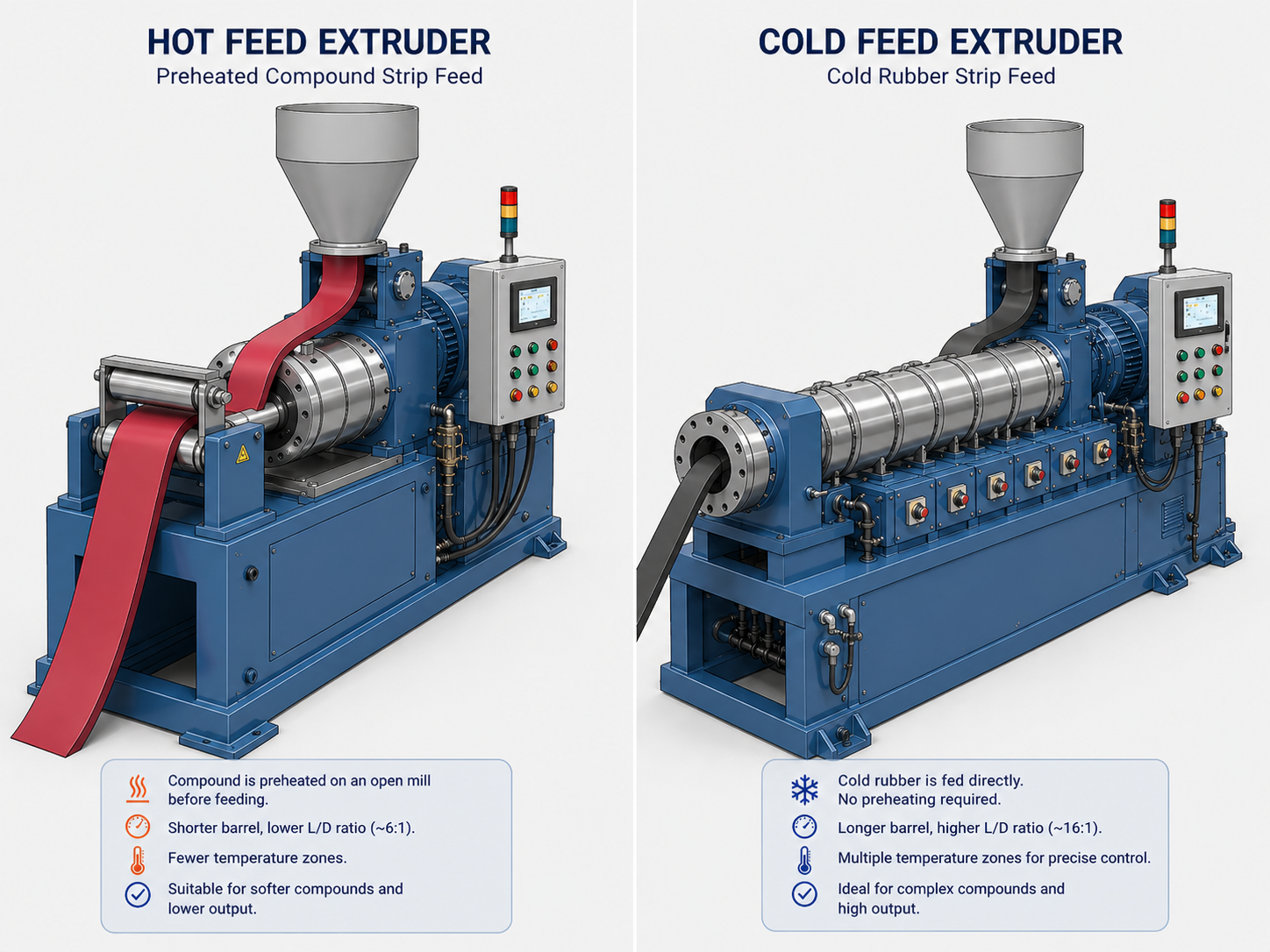
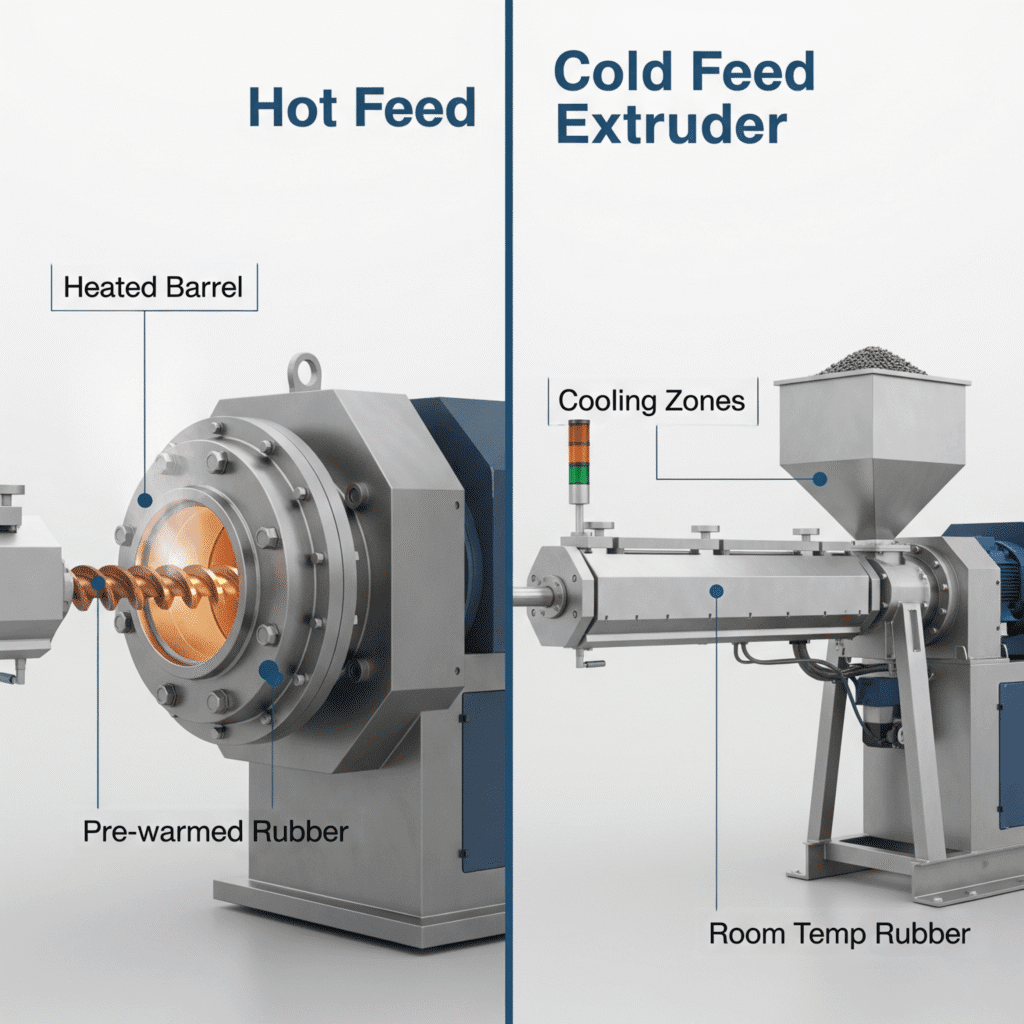
Hot feed rubber extruder machines process pre-heated rubber compounds that have been warmed and plasticized on mixing mills before entering the extrusion system. This pre-heating process significantly improves material flow and product quality.
Core Operating Principles
In hot feed extrusion, the rubber strip that is fed into the machine must be pre-warmed and plasticized on a rubber mill prior to processing. This preparation ensures optimal material consistency and reduces stress on the extruder components.
The pre-heating process enhances rubber compound plasticity, making it easier for the screw mechanism to transport and shape the material through the die assembly.
Hot feed systems operate at elevated temperatures throughout the barrel, maintaining material consistency from feed throat to die exit.
Industry Standards and Certifications
When selecting rubber extruding equipment, ensure your chosen manufacturer follows industry standards and maintains proper certifications. The Association for Rubber Products Manufacturers (ARPM) provides members with rubber processing training, networking, cost reduction, lead generation, news and benchmarking to maintain industry excellence.
Look for manufacturers who comply with ISO 9001 quality management standards and maintain certifications relevant to your specific industry applications.
Quality certifications ensure that your extruder investment meets performance expectations and regulatory requirements for your target markets.
For comprehensive industry resources and technical support, visit the Association for Rubber Products Manufacturers at https://arpminc.com/ to access training programs and industry best practices.
Key Advantages of Hot Feed Processing
Hot feed rubber extruder machines offer superior production rates compared to cold feed alternatives. The pre-heated material requires less mechanical energy to achieve proper flow characteristics.
Enhanced dispersion of additives and fillers occurs during the pre-heating process, resulting in improved mechanical properties in finished products.
Energy efficiency improves because less power is needed to maintain processing temperatures when material enters the extruder already heated.
Product quality consistency increases due to uniform temperature distribution and reduced thermal gradients throughout the processing chamber.
Cold Feed Extruder for Rubber Applications
Cold feed extruders process rubber compounds at ambient temperature, eliminating the need for pre-heating equipment and reducing overall system complexity.
Operational Characteristics
Cold feed extrusion involves feeding rubber compounds at ambient or room temperature into the extruder. This process relies on the extruder screw to soften and mix the rubber, eliminating the need for pre-heating.
The extruder screw generates heat through friction and mechanical shearing, gradually warming the compound to processing temperature as it moves through the barrel.
Cold feed systems require specially designed screws with optimized geometry to handle the additional heating requirements effectively.
Advantages of Cold Feed Systems
No warming mill required as cold rubber can be feeded at room temperature thus saving power and labour and cost of warming mills. This eliminates significant capital investment in auxiliary heating equipment.
Simplified material handling reduces labor requirements and potential safety hazards associated with handling hot materials.
Lower initial equipment costs make cold feed systems attractive for smaller operations or specific applications where volume doesn’t justify hot feed complexity.
Reduced facility space requirements because warming mills and associated equipment are not needed in the production line.
Comprehensive Rubber Extruder Machine Specifications
Understanding technical specifications helps manufacturers select appropriate equipment for their specific production requirements and quality standards.
Barrel Design and Construction
Barrels are steel fabricated, jacketed for heating and cooling with replaceable liners. This construction provides excellent temperature control and extends service life through liner replacement.
Modern extruder barrels feature multi-zone temperature control systems that maintain precise thermal profiles throughout the processing length.
Barrel diameters typically range from 40mm to 250mm, with length-to-diameter (L/D) ratios between 14:1 and 20:1 depending on application requirements.
Replaceable barrel liners use hardened steel construction to resist wear from abrasive rubber compounds and extend operational life.
Screw Design Features
Scroll and liners made of EN-41b, nitra hardened and polished. This material specification ensures excellent wear resistance and surface finish for optimal material flow.
Screw geometry varies based on compound characteristics and processing requirements. Compression ratios, flight depths, and pitch configurations are customized for specific applications.
Variable speed drives allow operators to adjust screw rotation speeds to match material characteristics and production requirements.
Cooling and heating channels within the screw provide additional temperature control for challenging compounds or precise processing requirements.
Feed System Components
Feed rolls are specially designed for easy maintenance. Feeding arrangement with spiral undercut and feed roll arrangement provided which ensures a proper bite & strip fed to screw.
Hardened feed rollers maintain consistent material feeding rates and resist wear from abrasive compounds.
Spiral undercut designs improve material grip and ensure uniform feeding into the screw compression zone.
Variable speed feed roll drives allow precise control of material input rates to match processing requirements.
Rubber Tube Making Extruder Systems
Specialized extruder configurations for tube production incorporate unique die designs and downstream equipment for forming hollow rubber products.
Tube Die Technology
Tube making extruders utilize crosshead dies that form hollow profiles by directing material flow around a mandrel or pin arrangement.
Die geometry must be precisely calculated to account for material swell, wall thickness variations, and dimensional tolerances required for the finished tube.
Temperature control within the die becomes critical for maintaining consistent wall thickness and preventing defects like wall thinning or thickness variations.
Mandrel support systems maintain concentricity and prevent deflection that could cause wall thickness irregularities in longer tube lengths.
Applications and Product Types
Bainite make plain type Cold Feed Extruders finds applications in tubes, hoses, cable coating, bicycle tyre tubes, etc.
Medical tube applications require exceptional cleanliness and dimensional precision that specialized extruder configurations can provide.
Automotive cooling system hoses demand specific compound properties and wall thickness tolerances that tube making extruders can achieve consistently.
Industrial hydraulic tubes need precise internal diameters and pressure ratings that depend on consistent extrusion processing.
Quality Control Considerations
Wall thickness monitoring systems use ultrasonic or laser measurement technology to detect variations during production and trigger automatic corrections.
Concentricity measurements ensure that tube walls maintain uniform thickness around the circumference to meet performance specifications.
Surface finish inspection identifies potential die wear or material contamination that could affect product quality or downstream processing.
Rubber Strip Extrusion Machine Capabilities
Strip extrusion represents one of the most common rubber processing applications, requiring precise dimensional control and surface quality.
Strip Die Design Principles
Strip dies feature rectangular openings with precise width and thickness dimensions that determine final product geometry.
Land length within the die affects surface finish and dimensional stability by providing time for flow stabilization before material exits.
Temperature uniformity across the die width becomes critical for maintaining consistent strip thickness and preventing edge effects.
Die swell calculations must account for material elasticity and processing conditions to achieve target dimensions in the finished strip.
Production Rate Optimization
Only SANTOSH Offers a vast range of HOT FEED RUBBER EXTRUDERS in size 40, 56, 63, 76, 100, 110, 150,200 & 250mm for different applications, such as Tread, Tubes, Profiles, Hoses, Sheeting with Roller die head, Cable coating, Dock Fenders, Straining of Raw materials, Press blanks, pre-warming
Larger extruder sizes provide higher production rates but require more careful temperature control and longer startup times.
Screw speed optimization balances output rate with material quality to achieve maximum productivity without compromising product specifications.
Downstream cooling systems must match extruder output rates to prevent backup and maintain consistent product dimensions.
Surface Quality Management
Surface defects often originate from contamination, improper die temperature, or incorrect material preparation before extrusion.
Die polishing and maintenance schedules prevent surface irregularities that transfer to the extruded strip and affect subsequent processing.
Material filtration systems remove contaminants that could cause surface defects or die damage during extended production runs.
Advanced Extruder Control Systems
Modern rubber extruding machines incorporate sophisticated control technology that optimizes processing parameters and ensures consistent product quality.
Temperature Control Technology
Multi-zone barrel heating systems provide independent temperature control for each processing section, allowing precise thermal profile management.
PID control algorithms maintain temperature stability within narrow tolerances despite variations in ambient conditions or production rates.
Heat recovery systems capture waste heat from cooling operations and redirect it to other process heating requirements for improved energy efficiency.
Emergency cooling systems provide rapid temperature reduction capability for material changeovers or emergency shutdown situations.
Pressure Monitoring Systems
A special pressure melt transducer is provided which gives a pressure indication on the head & controls the screw rpm a per the set pressure valve enabling extrusion at a consistent pressure.
Real-time pressure feedback enables automatic adjustment of processing parameters to maintain consistent extrusion conditions.
Pressure trend analysis helps predict maintenance requirements and optimize processing parameters before quality problems develop.
Safety interlocks prevent operation at dangerous pressure levels that could damage equipment or create safety hazards.
Data Acquisition and Analysis
Production monitoring systems track key parameters including temperatures, pressures, speeds, and output rates for quality control and optimization.
Statistical process control algorithms identify trends and variations that require attention before they affect product quality.
Historical data analysis supports process improvement initiatives and helps optimize maintenance scheduling based on actual operating conditions.
Material Handling and Preparation Systems
Proper material preparation significantly impacts extruder performance and product quality, requiring specialized equipment and procedures.
Compound Preparation Requirements
Rubber compounds must achieve proper plasticity and temperature uniformity before entering the extruder feed throat.
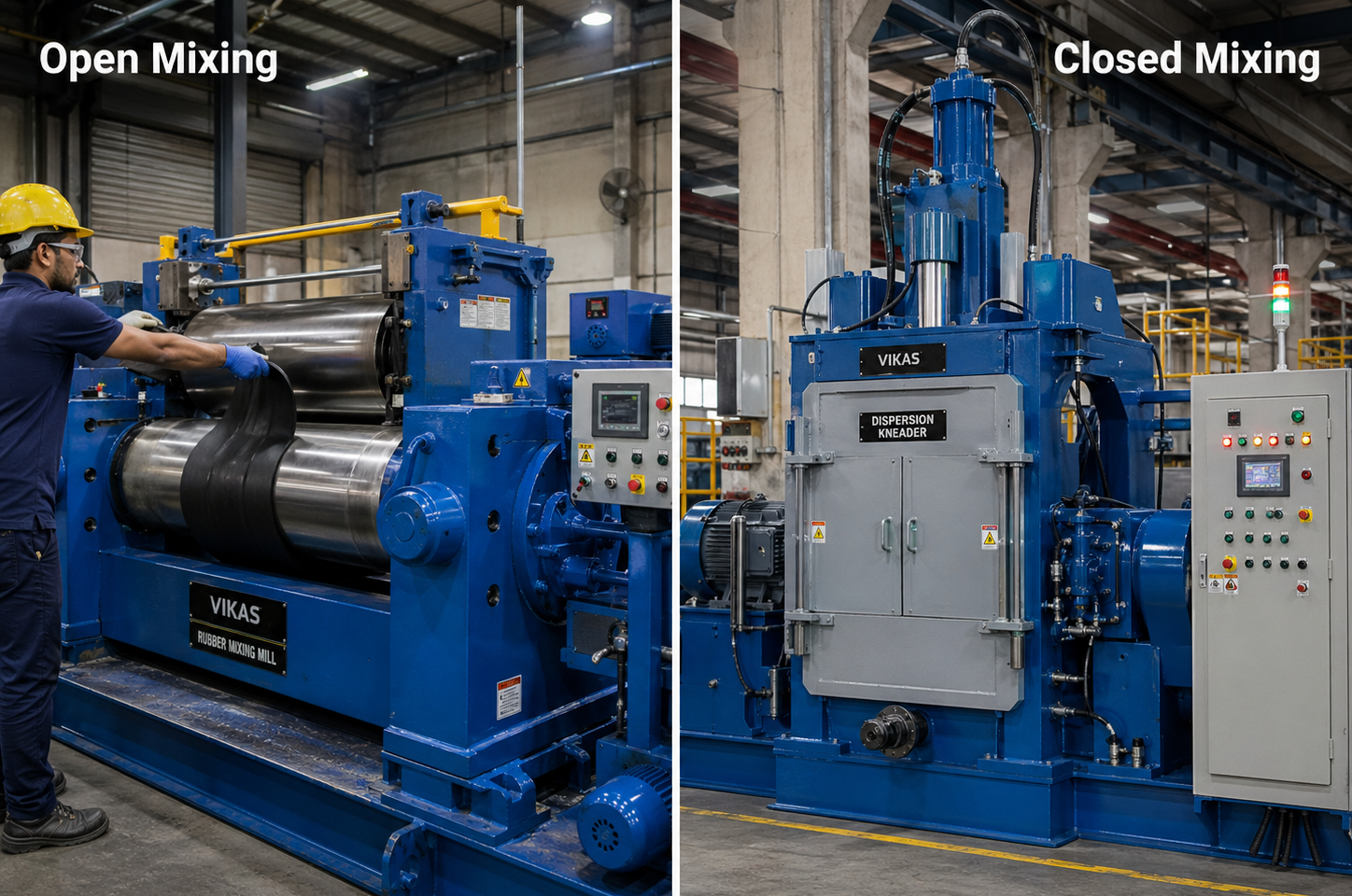
Mixing mill operations develop compound structure and dispersion characteristics that affect extrusion behavior and final product properties.
Temperature conditioning ensures that material enters the extruder at optimal processing temperature for consistent flow characteristics.
Material inspection removes foreign objects and identifies compound defects that could cause processing problems or product defects.
Feed System Automation
Automated feeding systems maintain consistent material supply rates and reduce operator involvement in routine feeding operations.
Weight monitoring systems track material consumption rates and provide data for production planning and inventory management.
Material identification systems ensure that correct compounds enter the extruder and prevent costly production errors.
Storage and Handling Considerations
Climate-controlled storage prevents compound degradation and maintains processing characteristics during extended storage periods.
First-in-first-out inventory rotation ensures that compounds are used within their shelf life limitations and maintain optimal properties.
Contamination prevention protocols protect compounds from foreign material that could damage equipment or affect product quality.
Quality Assurance in Rubber Extrusion
Comprehensive quality control programs ensure that extruded products meet specifications and maintain consistency across production lots.
Dimensional Control Systems
Laser measurement systems provide continuous monitoring of product dimensions with immediate feedback for process adjustment.
Statistical sampling protocols ensure adequate inspection coverage while maintaining production efficiency and cost control.
Coordinate measuring machines verify complex profile dimensions that cannot be measured effectively with online systems.
Gauge repeatability and reproducibility studies validate measurement system accuracy and ensure reliable quality data.
Physical Property Testing
Tensile strength testing verifies that extrusion processing maintains compound mechanical properties within specified ranges.
Hardness measurements detect variations in compound curing or mixing that could affect product performance in service applications.
Elongation testing identifies potential compound degradation or processing problems that affect material flexibility and durability.
Process Validation Procedures
Installation qualification verifies that extruder systems are installed correctly and meet design specifications before production use.
Operational qualification demonstrates that systems operate correctly across their intended operating ranges and conditions.
Performance qualification proves that systems consistently produce products meeting all quality specifications under normal operating conditions.
Energy Efficiency and Sustainability
Modern rubber extruding machines incorporate energy-saving technologies that reduce operating costs while maintaining production capability.
Power Consumption Optimization
Variable frequency drives adjust motor speeds to match actual processing requirements, reducing energy consumption during lower demand periods.
High-efficiency motors and drives minimize electrical losses and reduce facility power requirements for equivalent production output.
Power monitoring systems track energy consumption patterns and identify opportunities for further efficiency improvements.
Heat Recovery Systems
Waste heat recovery from cooling systems reduces overall facility heating requirements and improves energy utilization efficiency.
Thermal insulation improvements reduce heat loss from processing equipment and lower heating energy requirements.
Process optimization reduces thermal cycling and maintains more stable operating conditions that require less energy input.
Environmental Considerations
Emission control systems capture and treat any process emissions to meet environmental regulations and community standards.
Material waste reduction programs minimize scrap generation and implement recycling systems for process waste materials.
Water conservation measures reduce cooling water consumption and implement closed-loop systems where feasible.
Maintenance and Service Requirements
Preventive maintenance programs ensure reliable operation and extend equipment life while minimizing unexpected downtime and repair costs.
Scheduled Maintenance Procedures
Daily inspection routines identify potential problems before they cause equipment failures or product quality issues.
Lubrication schedules maintain proper bearing and drive system operation while preventing premature wear and failure.
Wear part replacement programs replace consumable components before they affect product quality or cause damage to other system components.
Troubleshooting Common Issues
Pressure fluctuations often indicate feed system problems, barrel wear, or die restrictions that require immediate attention.
Temperature variations may result from heater failures, insulation damage, or cooling system malfunctions that affect process stability.
Product dimension variations typically trace to die wear, temperature control problems, or material property changes requiring investigation.
Spare Parts Management
Critical spare parts inventory ensures rapid repair capability for components that could cause extended downtime if unavailable.
Vendor relationships provide reliable access to replacement parts and technical support when needed for maintenance activities.
Maintenance history tracking identifies wear patterns and helps optimize spare parts inventory levels and replacement schedules.
Finding Reliable Rubber Extruder Manufacturers
Selecting the right manufacturer is crucial for obtaining quality equipment that meets your specific production requirements and provides long-term reliability.
Manufacturer Evaluation Criteria
Research manufacturers with proven track records in rubber extrusion equipment design and manufacturing. Look for companies that offer comprehensive support including installation, training, and ongoing technical assistance.
Evaluate the manufacturer’s experience with your specific application requirements and their ability to provide customized solutions when standard equipment doesn’t meet your needs.
Review customer references and case studies to understand how the manufacturer’s equipment performs in real-world production environments similar to yours.
For a comprehensive directory of certified rubber extruder manufacturers and suppliers, visit https://extrudedrubber.net/rubber-extruders/ to find ISO 9001 certified suppliers offering superior custom solutions.
Service and Support Capabilities
Choose manufacturers who provide comprehensive after-sales support including spare parts availability, technical training, and emergency service capabilities.
Evaluate the manufacturer’s global service network and local support presence to ensure timely assistance when needed.
Consider manufacturers who offer equipment upgrades and modernization services to extend equipment life and improve performance over time.
Cost Analysis and ROI Considerations
Understanding the total cost of ownership helps manufacturers make informed decisions about extruder selection and justify equipment investments.
Initial Investment Analysis
Equipment costs vary significantly based on size, configuration, and automation level, requiring careful evaluation of production requirements.
Installation costs include foundations, utilities, and auxiliary equipment that may represent significant additional investment beyond equipment purchase price.
Training costs ensure operators and maintenance personnel can effectively operate and maintain sophisticated extruder systems.
Operating Cost Factors
Energy consumption represents a major ongoing cost that varies based on equipment efficiency and production requirements.
Maintenance costs include both routine preventive maintenance and unexpected repairs that affect total operating expenses.
Labor requirements depend on automation level and production complexity, influencing long-term operating cost projections.
Productivity Benefits
Higher production rates reduce unit costs and improve return on investment through increased throughput capability.
Quality improvements reduce scrap rates and rework costs while improving customer satisfaction and market competitiveness.
Reduced downtime increases effective production capacity and improves delivery reliability for customer orders.
Future Trends in Rubber Extrusion Technology
Emerging technologies continue to advance rubber extrusion capabilities and improve processing efficiency, quality, and flexibility.
Industry 4.0 Integration
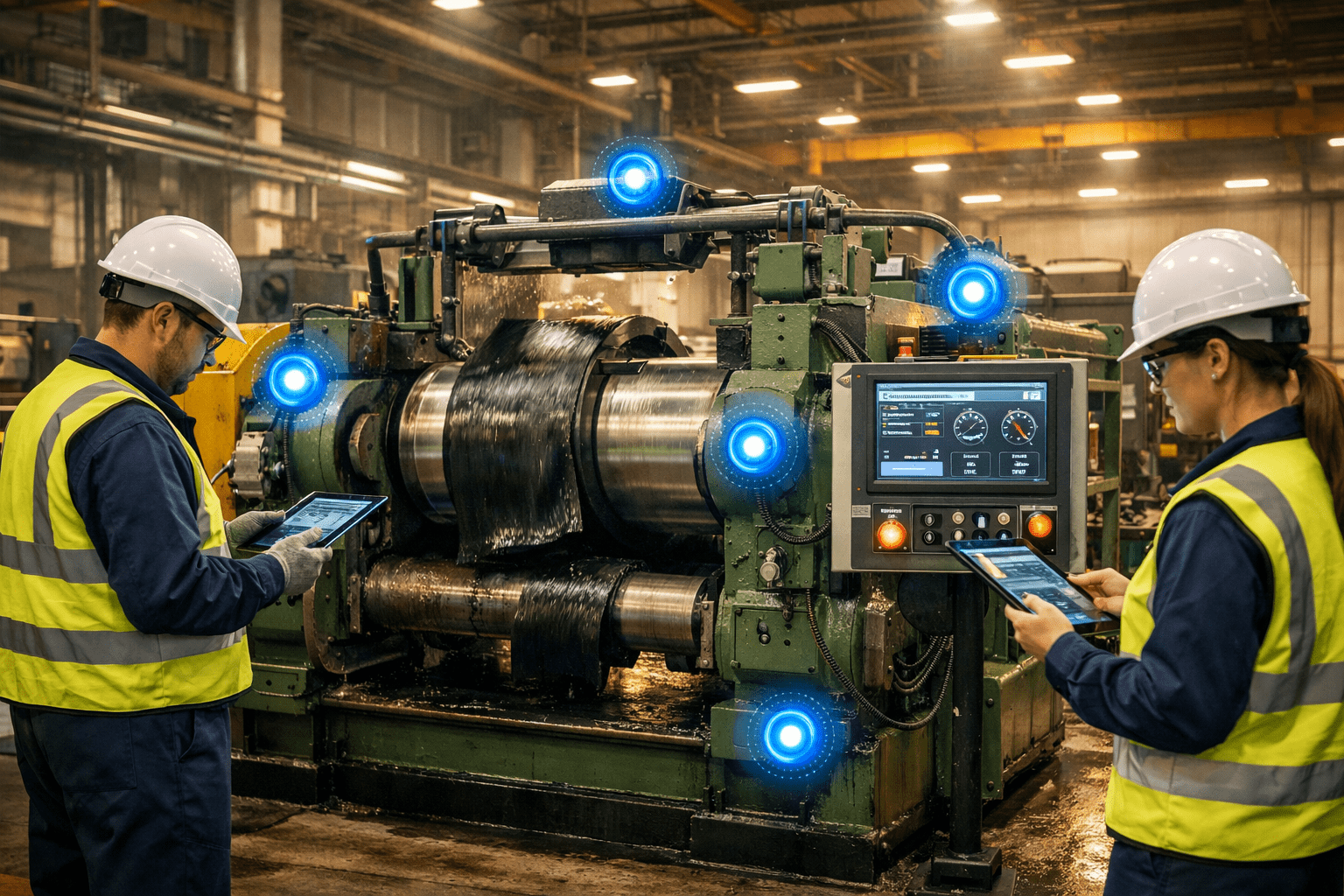
Connected systems provide remote monitoring capabilities and predictive maintenance features that optimize equipment performance.
Data analytics platforms process operational data to identify optimization opportunities and predict maintenance requirements.
Automated quality control systems reduce inspection costs and provide more comprehensive quality assurance coverage.
Advanced Materials Processing
New compound formulations require updated processing capabilities and equipment modifications to handle evolving material requirements.
Sustainable materials processing addresses environmental concerns and regulatory requirements for eco-friendly production methods.
High-performance compounds demand precise processing control and specialized equipment capabilities for challenging applications.
Automation and Robotics
Automated material handling reduces labor requirements and improves consistency in material preparation and feeding operations.
Robotic downstream processing integrates with extrusion systems to provide complete automated production capabilities.
Quality inspection automation provides faster, more accurate product evaluation with reduced labor requirements.
Frequently Asked Questions About Rubber Extruding Machines
What’s the difference between hot feed and cold feed rubber extruders?
Hot feed rubber extruder machines process pre-heated rubber compounds that have been warmed on mixing mills, resulting in higher production rates and better energy efficiency. Cold feed extruders process rubber at ambient temperature, eliminating the need for pre-heating equipment but requiring specially designed screws to generate processing heat through friction.
How do I determine the right extruder size for my production needs?
Extruder sizing depends on your required output rate, product dimensions, and compound characteristics. Barrel diameters range from 40mm to 250mm, with larger sizes providing higher production capacity. Consider factors like material flow rate, die restrictions, and downstream processing capabilities when selecting appropriate size.
What maintenance is required for rubber extruding equipment?
Regular maintenance includes daily inspections, lubrication according to manufacturer schedules, temperature monitoring, and replacement of wear components like barrel liners and screw elements. Preventive maintenance programs significantly extend equipment life and reduce unexpected downtime.
Can one extruder handle multiple product types?
Modern rubber extruders offer flexibility through changeable dies and adjustable processing parameters. However, frequent product changes may require additional setup time and different die sets. Consider your production mix when evaluating equipment flexibility requirements.
Conclusion
Rubber extruding machines represent critical manufacturing equipment that requires careful selection based on specific production requirements, material characteristics, and quality standards.
Hot feed rubber extruder machines offer superior production rates and quality for high-volume operations, while cold feed extruders provide cost-effective solutions for specialized applications.
Understanding the technical specifications, operational requirements, and maintenance considerations enables manufacturers to make informed equipment decisions that optimize productivity and profitability.
The future of rubber extrusion technology continues to evolve with advances in automation, control systems, and materials processing capabilities that will further improve manufacturing efficiency and product quality.
Successful rubber extrusion operations require comprehensive planning that considers equipment selection, process optimization, quality control, and maintenance requirements to achieve long-term manufacturing success.