“We had three mixing mill options on our shortlist, each promising different benefits. After six weeks of evaluation and two failed demos, here’s exactly how we made the decision that increased our production efficiency by 34%.” — Rajesh Patel, Plant Manager, Mumbai Rubber Industries
When Rajesh faced the challenge of replacing his facility’s aging mixing mills, he discovered what many plant managers learn the hard way: choosing the wrong rubber mixing mill can cost hundreds of thousands in lost productivity, maintenance headaches, and missed production targets.
If you’re evaluating rubber mixing mills for your facility, this comprehensive buyer’s guide will walk you through the exact decision framework that industry leaders use to select equipment that delivers measurable ROI.
Understanding Rubber Mixing Mill Fundamentals
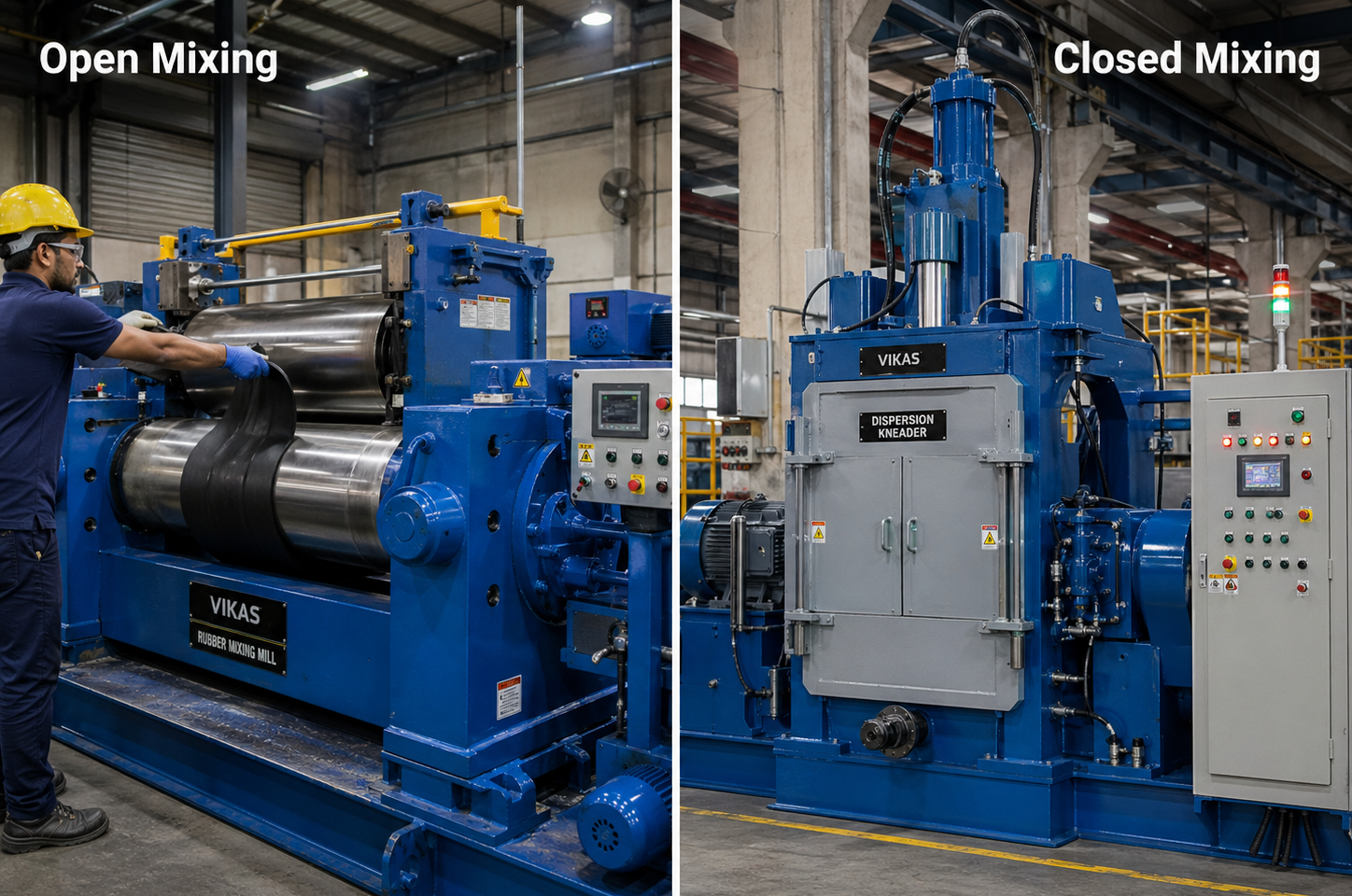
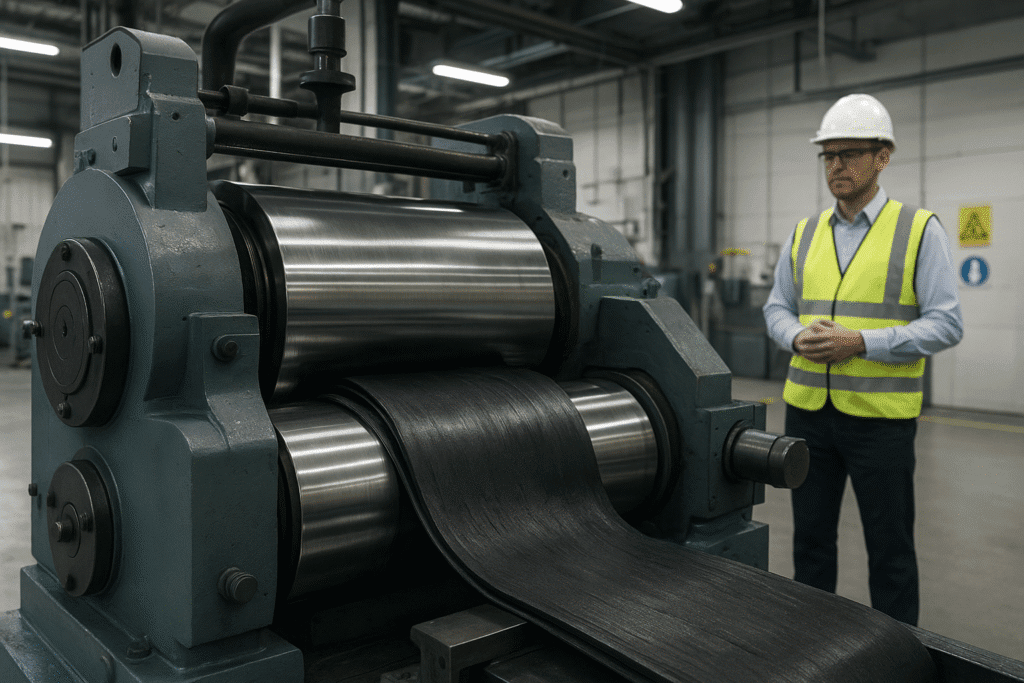
A rubber mixing mill, also known as an open mill, is the backbone of rubber processing operations. These machines blend raw rubber with various additives, fillers, and chemicals to create the precise compounds needed for your end products.
The fundamental principle involves two counter-rotating rolls operating at different speeds, creating a nip point where intensive mixing occurs. The friction differential between the rolls generates heat and shear forces that break down rubber molecules and distribute additives uniformly.
Key Performance Metrics That Matter
Before diving into specifications, understand these critical performance indicators:
- Mixing efficiency: Measured by compound uniformity and batch cycle time
- Energy consumption: kWh per kg of compound produced
- Maintenance downtime: Hours per month of unplanned maintenance
- Product consistency: Variation in compound properties batch-to-batch
- Throughput capacity: Actual vs. theoretical production rates
The Complete Rubber Mixing Mill Buyer’s Checklist
1. Production Requirements Analysis
Batch Size Considerations
- Minimum batch size: _____ kg
- Maximum batch size: _____ kg
- Average batch size: _____ kg
- Daily production target: _____ kg
Compound Types
- Natural rubber compounds
- Synthetic rubber (SBR, NBR, EPDM)
- High-filler compounds (>50% filler content)
- Color-critical compounds
- Specialty compounds (conductive, flame-retardant)
2. Technical Specifications Evaluation
Roll Specifications
- Roll diameter: Larger diameters (450-600mm) provide better mixing but require more floor space
- Roll length: Match to your typical batch sizes (length-to-diameter ratio of 2.5:1 to 3:1 is optimal)
- Roll speed ratio: 1:1.4 ratio is standard; some applications benefit from variable ratios
- Roll surface: Chrome-plated, nitrided, or specialized coatings for specific compounds
Drive System Requirements
- Motor power: Calculate based on 0.3-0.5 kW per kg of batch capacity
- Speed control: Variable frequency drives for precise speed control
- Torque characteristics: Sufficient starting torque for heavy compounds
- Overload protection: Essential for preventing damage during mixing
3. Safety and Compliance Standards
Mandatory Safety Features
- Emergency stop systems (accessible from multiple positions)
- Roll bite safety devices (photoelectric barriers)
- Automatic roll separation on emergency
- Safety fencing and interlocks
- Operator training certification requirements
Regulatory Compliance
- CE marking (for European markets)
- OSHA compliance (US operations)
- Local electrical and safety standards
- Environmental regulations for emissions
4. Operational Cost Analysis
Energy Consumption Factors
- Motor efficiency ratings (premium efficiency motors reduce operating costs by 2-4%)
- Heating/cooling requirements
- Compressed air consumption
- Hydraulic system power requirements
Maintenance Cost Considerations
- Bearing replacement frequency and costs
- Roll refurbishment requirements
- Hydraulic seal replacement schedules
- Availability and cost of spare parts
5. Vendor Evaluation Criteria
Manufacturing Capabilities
- Years in business and industry reputation
- Manufacturing facility certifications (ISO 9001, etc.)
- Reference installations in similar applications
- Local service and support capabilities
After-Sales Support
- Warranty terms and coverage
- Response time for service calls
- Parts availability and delivery times
- Training and technical support offering.

ROI Calculator Framework
Initial Investment Calculation
Equipment Costs
- Base machine price: $______
- Installation costs: $______
- Auxiliary equipment: $______
- Training and startup: $______
- Total Initial Investment: $______
Annual Operating Cost Analysis
Direct Operating Costs
- Energy consumption: _____ kWh/year × $_____ /kWh = $______
- Maintenance materials: $______/year
- Labor costs: _____ hours/year × $_____ /hour = $______
Productivity Benefits
- Increased throughput: _____ kg/year × $_____ profit margin = $______
- Reduced waste: _____ kg/year × $_____ material cost = $______
- Quality improvements: $______/year in reduced rejections
Simple ROI Calculation
Annual Net Benefit = (Productivity Gains + Cost Savings) – Operating Costs ROI = (Annual Net Benefit ÷ Initial Investment) × 100 Payback Period = Initial Investment ÷ Annual Net Benefit
Decision Matrix Scoring System
Create a weighted scoring system for your final selection:
| Criteria | Weight | Supplier A Score | Supplier B Score | Supplier C Score |
|---|---|---|---|---|
| Technical specs | 25% | ___/10 | ___/10 | ___/10 |
| Price competitiveness | 20% | ___/10 | ___/10 | ___/10 |
| Service support | 20% | ___/10 | ___/10 | ___/10 |
| Delivery timeline | 15% | ___/10 | ___/10 | ___/10 |
| References/reputation | 10% | ___/10 | ___/10 | ___/10 |
| Warranty terms | 10% | ___/10 | ___/10 | ___/10 |
Multiply each score by its weight and sum for a total weighted score.
Common Pitfalls to Avoid
Oversizing Your Equipment
Many buyers assume bigger is always better. Oversized mills waste energy and may not mix small batches effectively. Size your mill for 80% of your maximum batch requirement.
Ignoring Total Cost of Ownership
The cheapest initial price often becomes the most expensive over the equipment’s lifetime. Factor in energy consumption, maintenance costs, and productivity impacts.
Inadequate Space Planning
Mixing mills require significant floor space, crane access for maintenance, and proper ventilation. Plan your layout before finalizing specifications.
Insufficient Power Infrastructure
Ensure your electrical system can handle starting currents and sustained loads. Upgrading electrical infrastructure after installation is expensive.
Making the Final Decision
Like Rajesh’s successful selection process, your decision should balance technical requirements, financial constraints, and long-term strategic goals. The mixing mill that delivers the best ROI isn’t necessarily the cheapest or most feature-rich—it’s the one that best matches your specific operational needs.
Next Steps
Ready to move forward with your rubber mixing mill evaluation? Here’s your action plan:
- Complete the buyer’s checklist with your specific requirements
- Calculate your ROI expectations using the framework provided
- Request detailed quotations from qualified manufacturers
- Schedule facility visits or demos with your top candidates
- Contact our technical experts for personalized guidance
Frequently Asked Questions
Q: What’s the typical lifespan of a rubber mixing mill? A: With proper maintenance, quality mixing mills operate effectively for 15-20 years. The rolls may need refurbishment every 5-7 years depending on usage and compound types.
Q: How do I calculate the right mill size for my production needs? A: Size your mill for batches that are 60-80% of maximum capacity. For example, if your largest batch is 50kg, consider a 60-75kg capacity mill for optimal mixing efficiency.
Q: What’s the difference between open mills and internal mixers? A: Open mills provide better operator control and easier cleaning but have higher labor requirements. Internal mixers offer higher productivity and better mixing consistency but require larger capital investment.
Q: How important is the roll speed ratio? A: The speed ratio (typically 1:1.4) is crucial for proper mixing. Some compounds benefit from adjustable ratios, but standard ratios work for 90% of applications.
Q: What maintenance schedule should I expect? A: Daily lubrication, weekly safety checks, monthly bearing inspections, and annual major maintenance including roll inspection and alignment checks.
Q: Can I retrofit my existing mill with modern controls? A: Yes, many mills can be upgraded with new drive systems, safety features, and automation. Contact us for a retrofit feasibility assessment.
Ready to find the perfect rubber mixing mill for your facility? Explore our complete range of rubber processing machinery or contact our technical team for personalized recommendations. Our experts at Vikas Industries have helped hundreds of manufacturers optimize their mixing operations with the right equipment selection.
Related Reading: [Maximizing Mixing Mill Efficiency: Maintenance Best Practices] | [Rubber Compound Quality Control: Testing and Optimization]